An invitation to
slow down, awaken our senses and reconnect with ourselves
The Quiet Awakening of Spring
Spring has well and truly arrived here in the southern hemisphere.
After the dormancy of winter, a subtle shift is taking place all around me. Spring doesn't arrive all at once. It unfolds gradually, often so quietly that we can miss its early signs if we aren't paying attention.
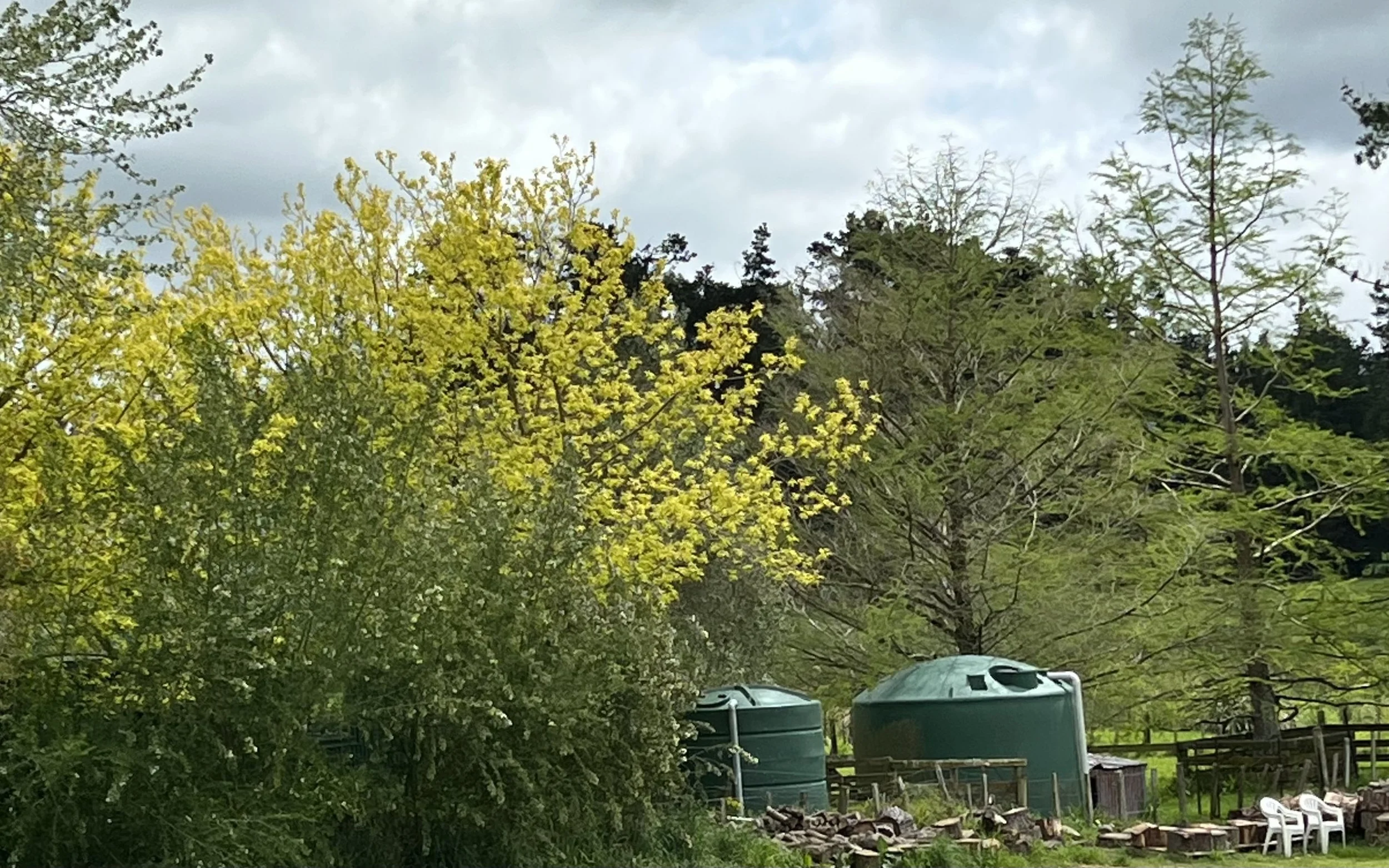
When I observe my natural environment, I become attuned to these subtle changes. I can visibly see the once bare brown branches beginning to shift in colour, tiny leaf buds emerge, and new textures and shades of green appear. Then, almost as if overnight, the leaves and blossoms seem to burst into life.
Nature doesn't rush, yet change is always happening.
Perhaps there is something we can learn from this gentle unfolding. What might we notice if we slowed down a little and paid attention, not only to the world around us, but also to ourselves?
Observing the Changing Trees
In the sunny Wairarapa countryside, in New Zealand where I live, we have many well established trees around us but not all of them lose their leaves. For those that do, I can now see the willow trees are wearing their new leaves, which are a fresh bright green colour.
The fruit trees all blossom at different times and stages. Those blossoming now are creating a riot of colour. The daylight hours are getting longer, bees are buzzing, and it is time to plant. Ahhh, I love this time of year.
Awakening Our Senses Through Nature
I notice the sun feels warmer now. The air on my exposed skin is no longer as cold in the mornings. My senses are alive. Like the sap rising in the trees, a new season begins, a palpable new energy arises.
I see the colours of blossoms, pinks, white, against the fresh foliage. Let alone the many different shades of green.
I hear the distinct sound of bees buzzing in the sycamore tree.
I feel the fresh grass underneath my feet and how quickly it has grown.
The quality of light changes, from bright sunlight to deep shade. Sitting in the shade of a tree at midday is so peaceful. Listening to the soft rustle of the poplar trees in the gentle breeze reminds me of a burbling stream. How do the colours, textures and sounds in your environment make you feel?
We live in a world rich with sensory experiences, extending far beyond the five senses we commonly hear about. Vibration is everywhere. We can not only hear them, but also sense vibrations in different ways. Some vibrations are too subtle for us to hear or feel, yet they are still present. Think of the soft, rhythmic sound of a baby's heartbeat, heard through an ultrasound machine. Colours, too, have their own frequencies of light. Although these are different from sound waves, they can still influence how we feel and experience the world around us.
Mindfulness: Learning to Pause and Notice
Do you observe the seasonal changes happening in nature around you? Do you notice the colours, the textures and how they make you feel? Or are you living in your head, head bowed looking at your phone, unobservant, racing from job to job, intent only on what you have to do?
We have probably all heard the familiar phrase, “Stop and smell the roses”. How apt this is in our modern world. It may not be flowers we smell, it could be pausing to watch waves at the beach, or clouds drifting in the sky, flames dancing in an open fire.
Will you give yourself permission to pause today.
STOP
Take a long, deep breath.
Center yourself by asking:
What can I see?
What can I hear?
What can I feel around me, and within myself?
Grounding yourself and becoming centred in the present moment need not take long. You might simply pause for a few breaths and observe your environment or you might choose to savour the experience for longer.
This is the practice of mindfulness.
Seasonal Changes and Our Inner Wellbeing
Observing the changing light that spring brings can offer us a space for deepening our reflections. Like exploring whether the light and darkness around us influence our mood, energy or sense of wellbeing.
How do our senses respond to the brighter days after winter. The natural world can reflect our inner experience, our own inner worlds can also have times of lightness and heaviness.
Bhramari Breathing: Exploring the Humming Bee Breath
Let’s explore ways to connect with the present moment through the body and breath.
The heart chakra in yoga is the energy associated with the nerve plexus around your heart and lungs. It’s traditionally associated with the many different shades of green and its said to be where our emotions live. So we can visually see the many different shades of green unfolding in spring.
Humming is a simple way to bring awareness to the breath and the sensations created by this sound.
Bhramari is the yogic humming-bee breathing practice, it imitates the droning sound of bees, when humming on an out breath. We can create a more internal sensation by gently closing our ears with our thumbs. Do you notice any vibrations? They may be in the mouth, head, throat, chest, or felt somewhere else.
Try it, its not rocket science. Sit quietly, begin by noticing the natural rhythm of the breath and, if comfortable, try a few gentle rounds of humming with a softly closed mouth and hum on the out-breath. Pitch the sound to what feels good to you. Remember there is no need to push or force the breath. Hear the sound, feel the sound. When you stop humming, let your breath resume its natural rhythm and sense if there are any silent after-vibrations felt within.
How Do We Want to Move Through Our World?
We know the world is constantly changing like the seasons, so take the time to notice, find the beauty around you and within you in this present moment. There is always something, isn't there? We simply need to look a little more closely or shift our perspective.
The world around us feels crazy at the moment, its full of distractions keeping us from resting within, in our own inner world.
Can we be the change we want to see in the outer world. Perhaps that begins with something small: noticing a tree, listening to the bees, taking a conscious breath, or choosing to be more present with the people around us, not stuck head down on our phones.
Spring reminds us that change can happen quietly, gradually and in its own time.
I encourage you to step outside, observe one small positive change in your environment and take a moment to appreciate it.
We don't have to change our entire lives to become more present. Sometimes, we simply need to stop, breathe and notice what is already there.
We can learn to notice what is unfolding around us, so that we can become more present to what is unfolding within us.
Our surroundings affects our experiences. What if you observe the season unfolding before you and take a moment to reflect on your own life. TAKE an opportunity to reconnect with yourself.
An Invitation to Pause
As spring unfolds around you, perhaps you might allow yourself a few moments to reconnect with the present.
Step outside, if you can. Notice one small change in nature. Listen to the birds or the bees, feel the warmth of the sun on your skin, or watch the gentle movement of leaves in the breeze.
Take a conscious breath and notice what is happening within you, too. Reconnect with yourself.
You don't need to change everything or find extra hours in your day. Sometimes, a small moment of awareness is enough to remind us that we are here, living, breathing and connected to the world around us.
What is one small thing you have noticed this spring that has brought you a moment of joy, calm or connection?